Owner: Rosenblum Group | Location: Schenectady, NY | Completion Date: N/A
The Lafayette, a 64-unit market-rate multifamily housing project, contains a mix of studio, one- bedroom, and two-bedroom apartments. The five- story project features a ground level parking garage with residential units above, to efficiently maximize development of the half acre lot. Throughout the duration of the integrated design process, the team set an energy road map that valued efficient all-electric systems, efficient envelope and mechanicals achieving an Energy Rating Index (ERI) 25% better than Energy Star Multifamily New Construction to reduce operating costs, individual systems to allow for tenant paid utilities with simple tenant controls, and cost effective first cost and overall operating costs to allow for a market rate apartment building in a downtown location. This abbreviated case study highlights outcomes of the mechanical selection and architectural detailing to achieve an efficient carbon neutral ready building.
NYSERDA Support
Through the use of NYSERDA Buildings of Excellence Early Design, the project has compared several mechanical systems including geothermal and air source heat pumps options, and utilized an integrated design process to design an energy efficient building. The project has received the Buildings of Excellence Demonstration Award, as well as other programs detailed below:
Buildings of Excellence Demonstration: $1,000,000
Early Design Support: $250,000
New Construction-Housing: $160,000
NY-Sun: TBD ($0.25/W)

Mechanical Systems Selection Guide
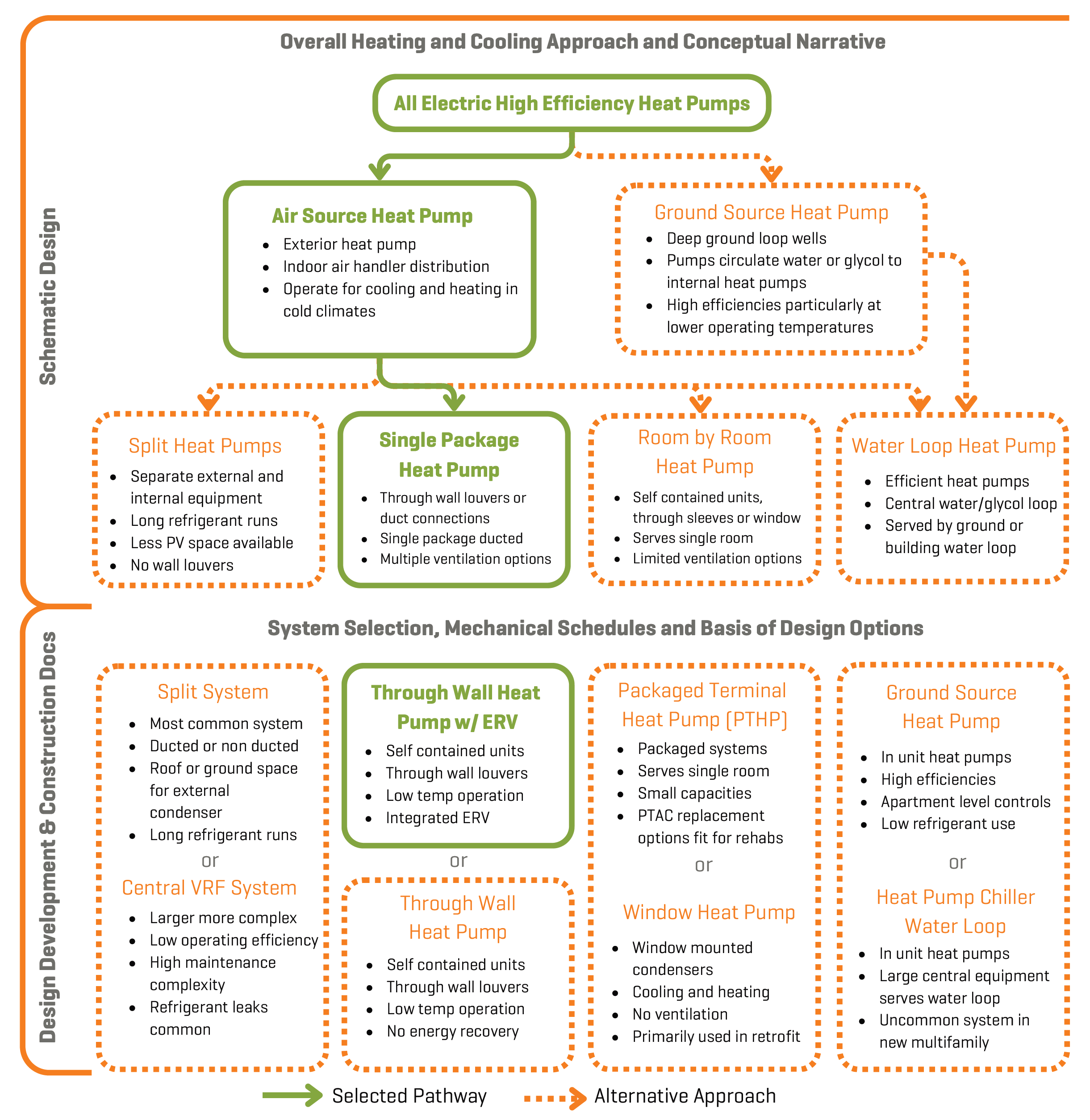
Selection of the type of mechanical system is essential to guide early design to achieve a high-performance building. The NYSERDA Early-Stage Design Study included the creation of a guide to assist in the selection of mechanical systems in the early Schematic Design stage. The study compared each systems potential features and benefits, including detailed cost comparisons of candidate systems, to select an appropriate mechanical system for the project. Below is a summary of the major features and selection criteria for the selected system and alternatives.
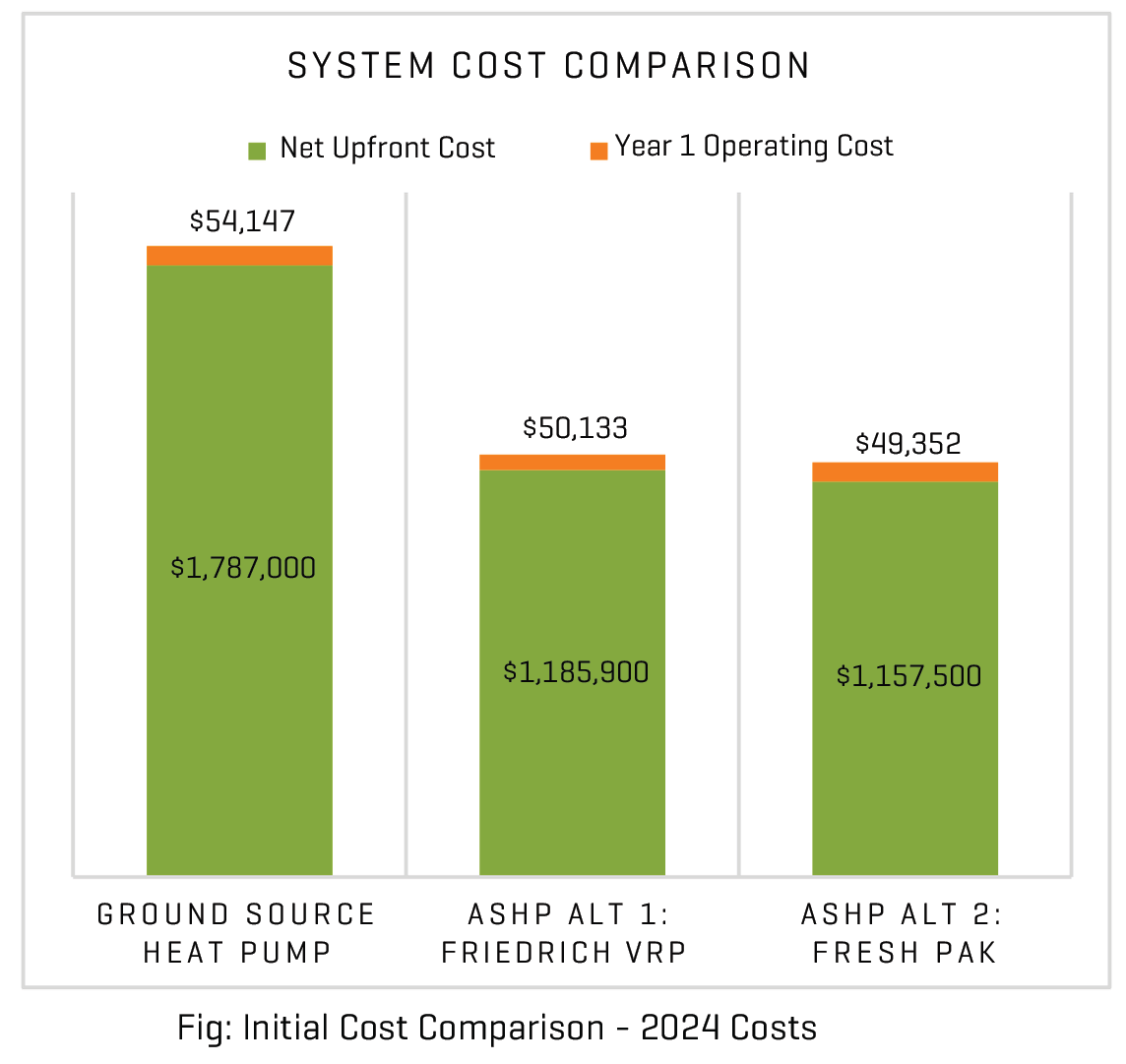
GSHP vs. ASHP Cost Comparison
The team compared the cost of a ground source heat pump (GSHP), a packaged through wall heat pump (Friedrich VRP System), and a packaged through wall heat pump with integrated ERV (FreshCo Fresh Pak). Using pricing from early 2024, the three were compared for their overall operating efficiency, initial cost including incentives and tax credits, and consistency in building operation and determined the packaged system with integrated ERV provided the ideal balance of efficiency and lower initial cost.
Packaged Heat Pump w/ ERV
Due to the lower overall lifetime cost including initial cost and operating cost, the team selected the through wall packaged heat pump with integrated ERV’s. There are multiple systems of this type including the FirstCo Fresh Pak EPE and Ice Air 8SPXC-ERV systems. The pros of these systems include a single package with ERV included for efficient overall performance, low refrigerant use and low leakage potential. The cons include being newer systems to the market, can have lower rated efficiencies than split systems, and include wall penetrations that should be detailed with care to prevent air leakage.

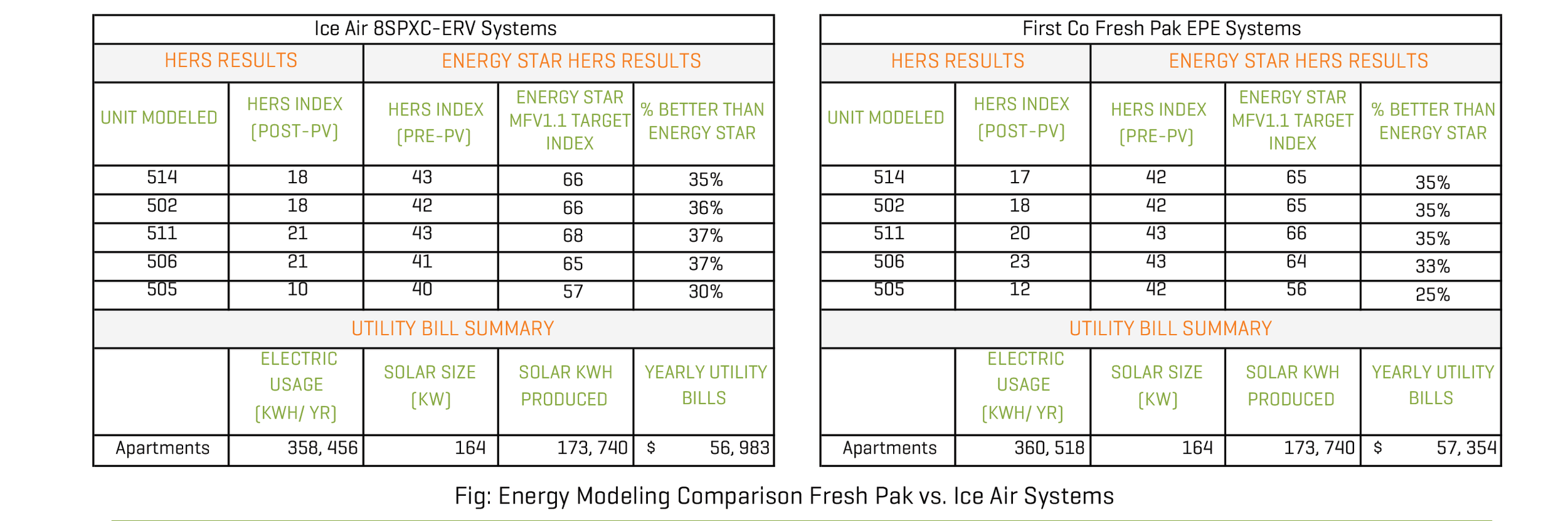
Energy Modeling Comparison Results
Once the system was selected, during Design Development the FirstCo Fresh Pak and Ice Air systems were compared for overall building efficiency, first cost, and cost of operation. The Ice Air system has a rough cost of $6,790 per system, with the FreshPak at $9,142 per system. The Ice Air provides better efficiencies at lower temperatures and lower initial costs and is the current preferred system. Final system selection will occur at start of construction.
Architectural Detailing
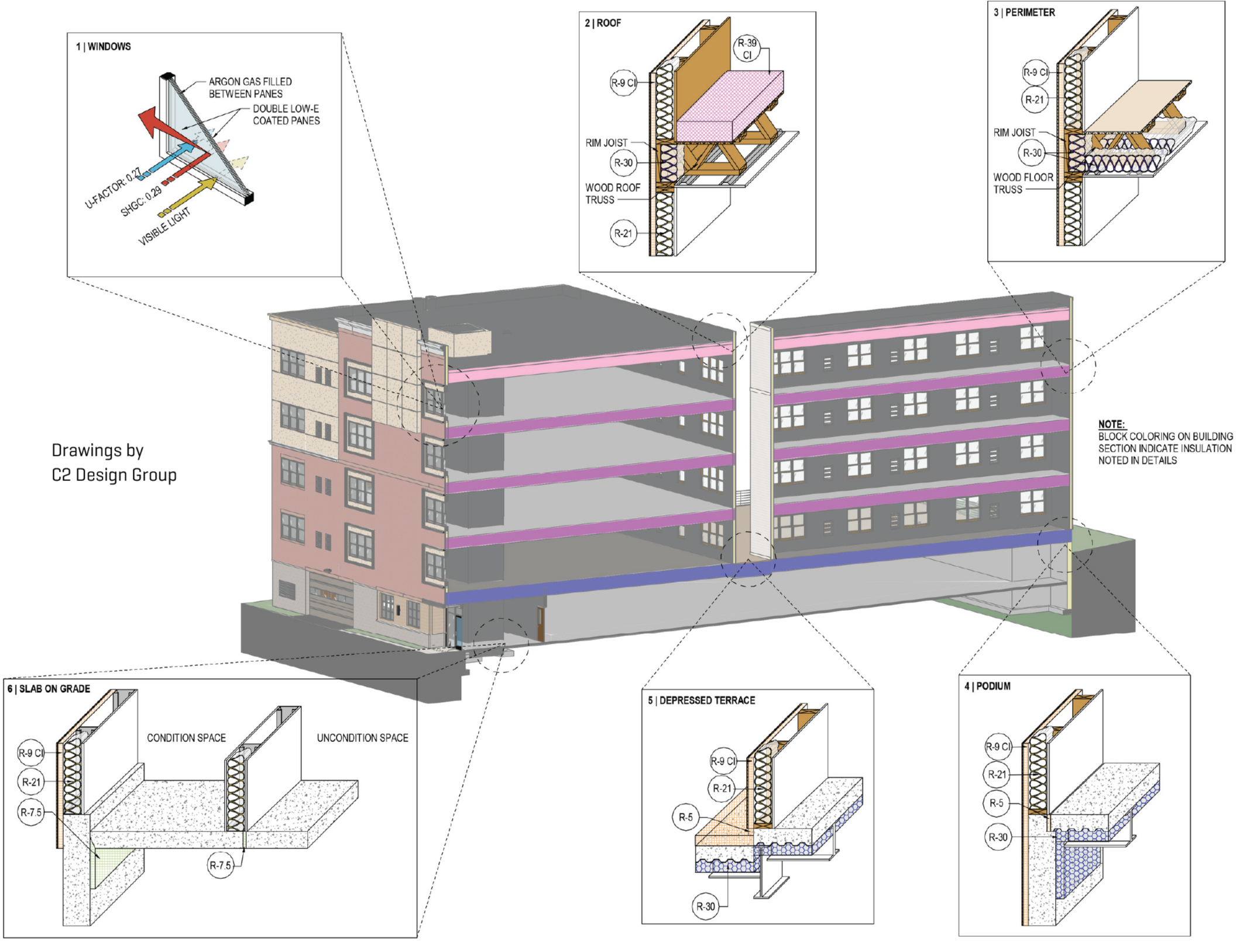
To achieve the goals of the energy road map established for the project, the design team provided details to achieve 35% better than the ERI of the Energy Star Multifamily New Construction Program which was identified as one of the primary efficiency goal of the project. Key features of the buildings envelope are shown below:
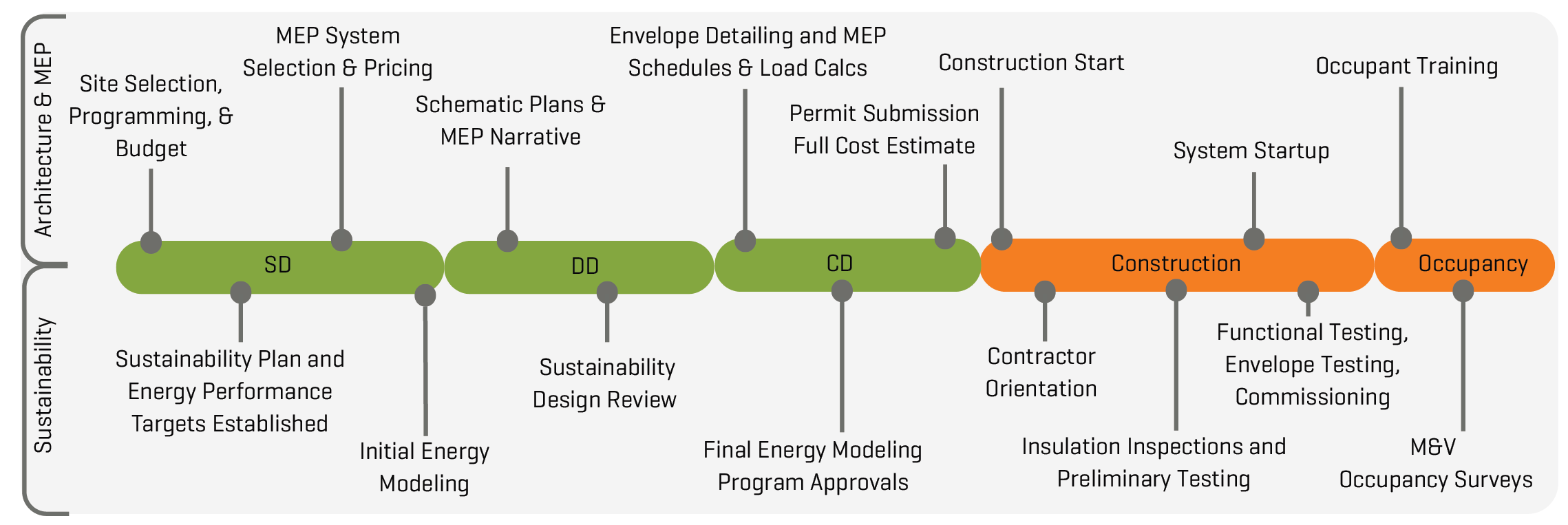
Integrated Design Process
The Lafayette project underwent an integrated design process to achieve a high-performance design. The benefits of this process include fully vetted and coordinated plans including energy modeling to assess performance, fully integrated energy efficient design, early cost comparisons, and innovative features such as solar PV inclusion and demand response capabilities. The following process outlines the integrated design process: